
07 - 01 - 2026
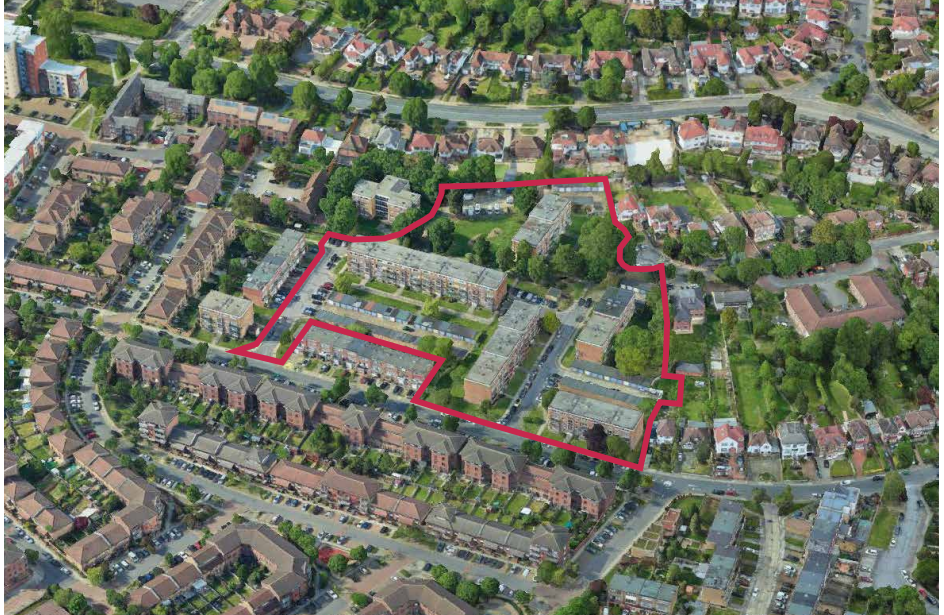
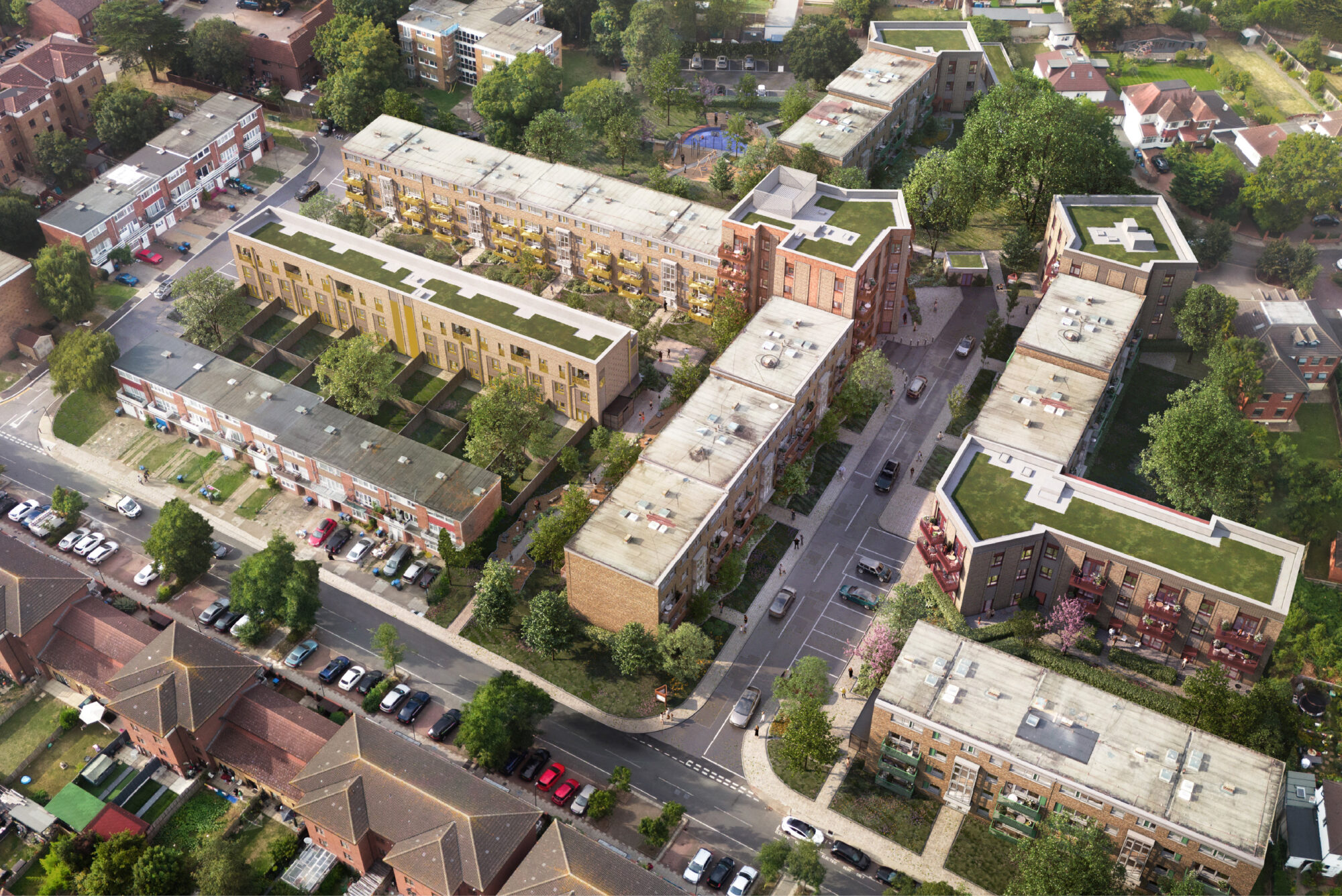
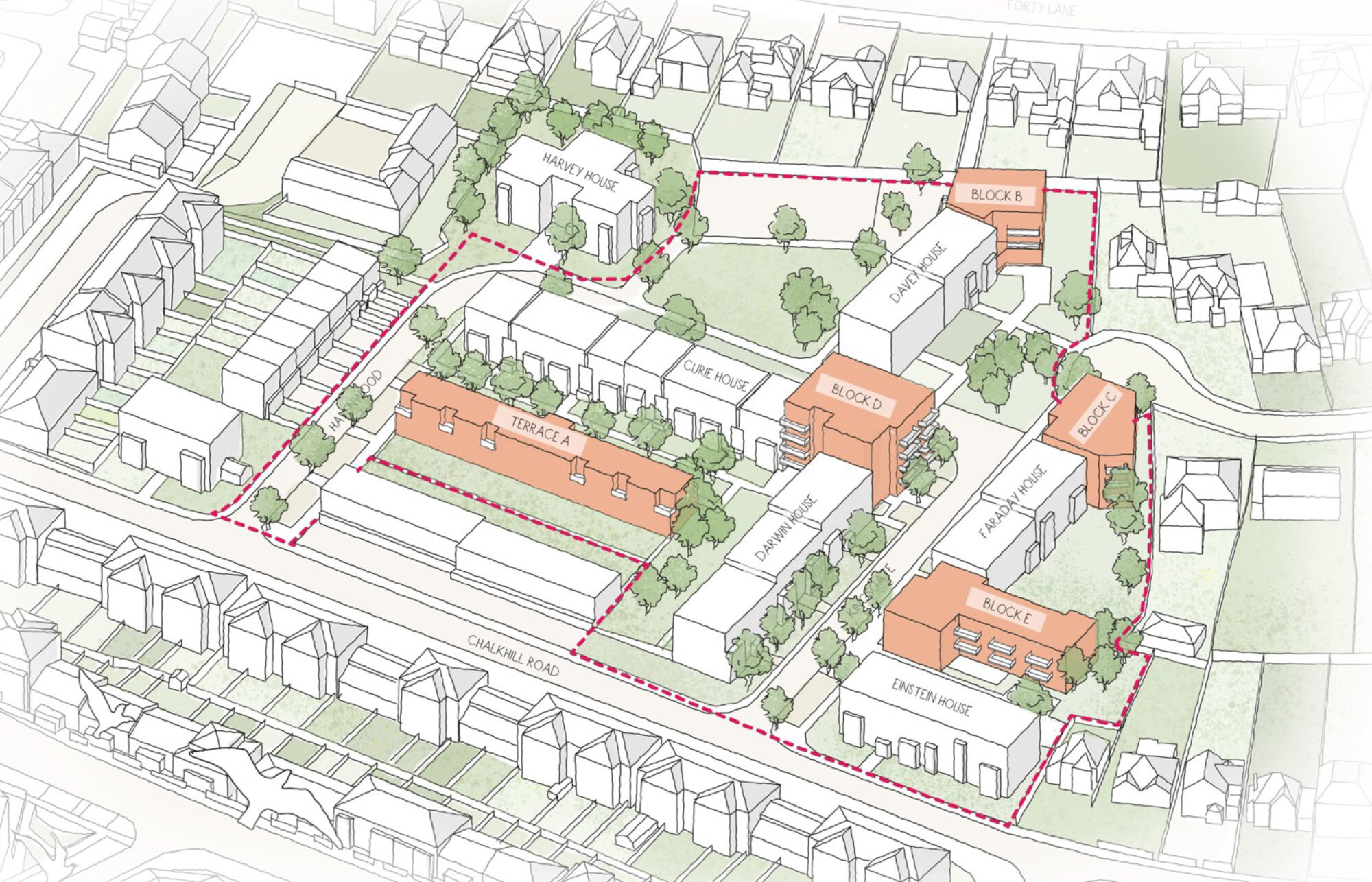
Planning permission has been granted for the Chalkhill Estate garage sites regeneration in Brent, unanimously approved by the Planning Committee. Chalkhill Estate in Wembley includes a number of outdated and underused garages and sits within one of the 20% most deprived neighbourhoods in England, facing long-standing environmental and social challenges. BPTW has been designing the infill regeneration scheme in close collaboration with Metropolitan Thames Valley Housing (MTVH). The proposals will replace 105 underused garages with 61 new social rented homes, including a mix of 1–4 bedroom houses and apartments, with 25% family-sized homes, delivered across five residential buildings of 3–5 storeys.
Guy Palmer, Director of Regeneration & Strategic Asset Management, MTVH, said:
“We’re delighted that Brent Council’s Planning Committee has approved this transformation of 105 underused garages, which will bring real benefits to existing and future residents and breathe new life into the area while helping to deliver the social housing the borough desperately needs.”
Neill Campbell, Partner, Architecture, BPTW said;
“A great way to conclude 2025 with a planning approval for 61 much needed affordable new homes! Working closely with MTVH, the local community and Turkington Martin we’ve designed new homes woven into the existing estate set within new communal amenity spaces and gardens to be enjoyed by all”
A landscape-led and community-focused design has been delivered from the outset. The new homes are carefully positioned to respect the existing estate’s character while introducing a contemporary identity. The new buildings align with the surrounding urban grain, their distinctive balconies echo the patterns of the existing estate, and other design features draw inspiration from the nearby Chalkhill Road Church. This thoughtful contrast enhances the estate’s visual identity while maintaining cohesion.
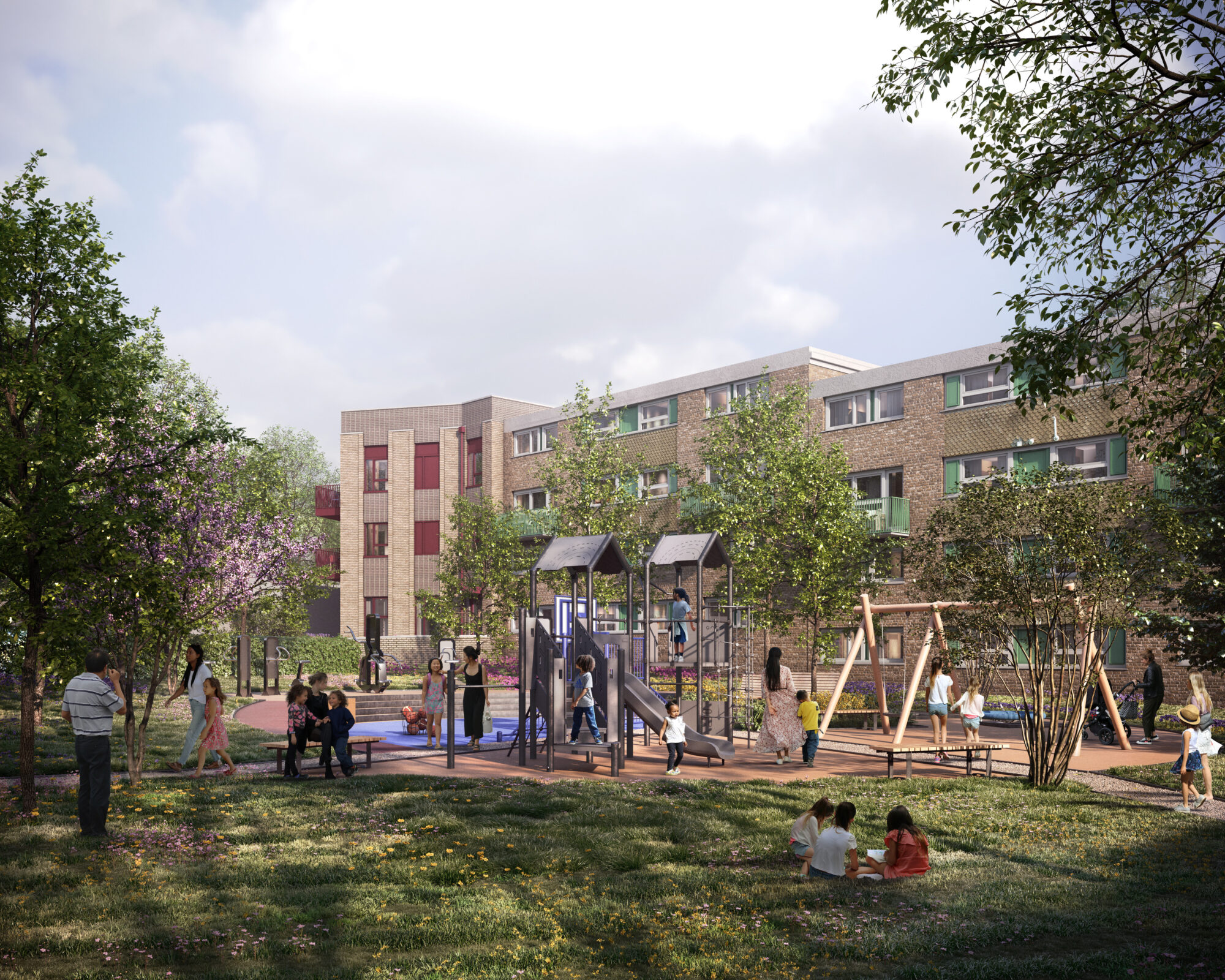
BPTW collaborated with landscape architects Turkington Martin to deliver a host of improvements for both existing and future residents. Existing communal amenity spaces have been designed to improve their functionality, and a new multigenerational play space, communal growing gardens, and informal play areas have been introduced. A network of improved footpaths and new connections enhances walkability and accessibility across the estate, while reconfigured parking and a car-free approach for new residents prioritise pedestrians and reduce vehicle dominance.
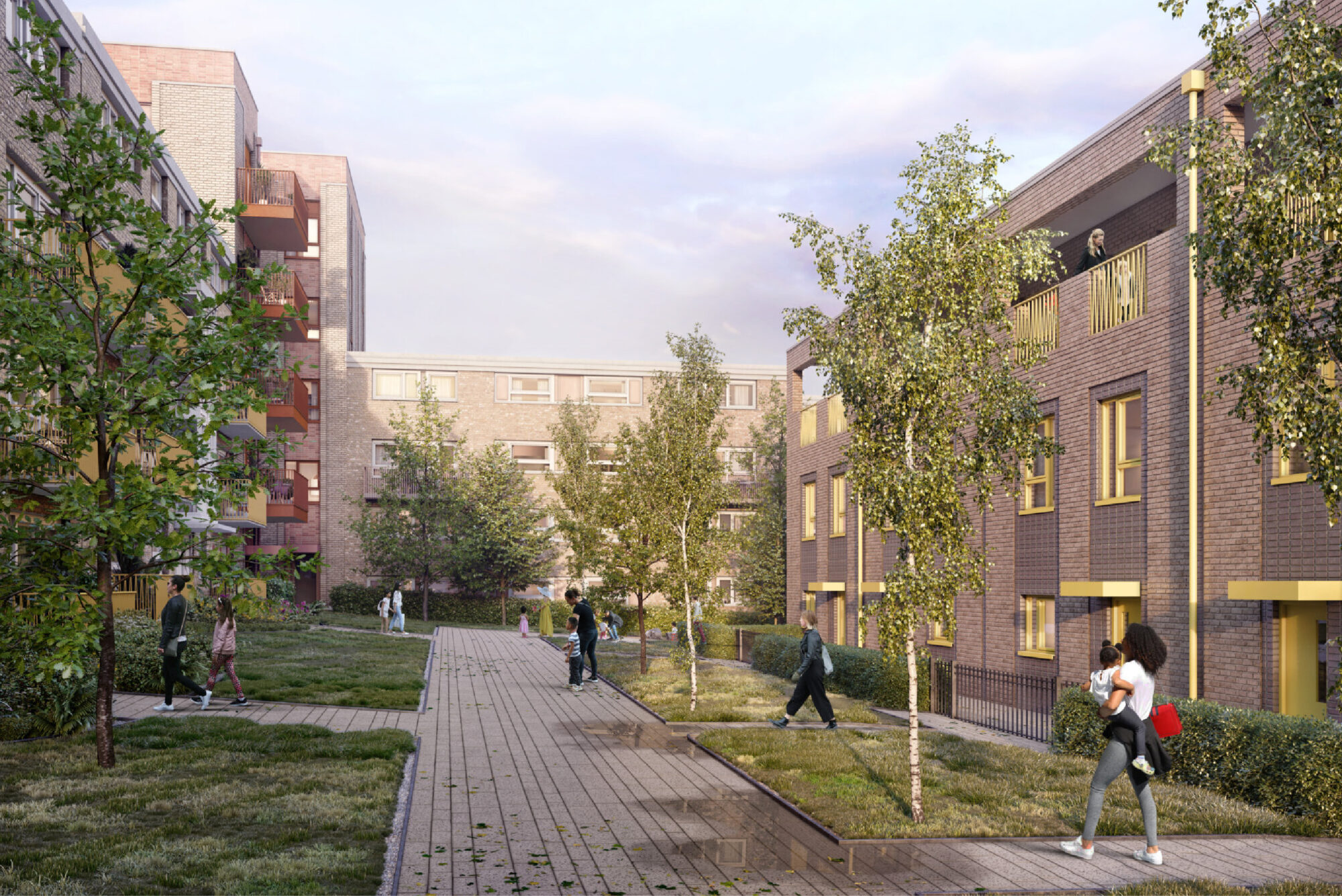
The site layout has been designed to maximise passive surveillance, with new homes overlooking green spaces and pathways. This addresses longstanding challenges of anti-social behaviour on the estate, creating a more secure and welcoming environment for all.
Sustainability is at the heart of the scheme. The new development achieves a 65% reduction in carbon emissions over the Part L baseline, incorporating air source heat pumps, water efficiency measures, and a robust Sustainable Drainage System (SuDS). Solar gain has been optimised through careful building orientation, and ecological enhancements will deliver a 10%+ biodiversity net gain and an Urban Greening Factor of 0.43.
BPTW also looked to improve the estate’s refuse strategy, with new bin stores for both existing and future residents, improved waste management, and better access routes which will help address historic issues with fly-tipping and overflow. Meanwhile, plant equipment has been consolidated into a single ground-floor location in one block, freeing up space in other buildings for additional ground-floor homes, enhancing street-level activity.
A significant milestone achieved by the BPTW team working closely with the wider project team including Metropolitan Thames Valley Housing, Turkington Martin, JLL, Black Point Design and PRP.